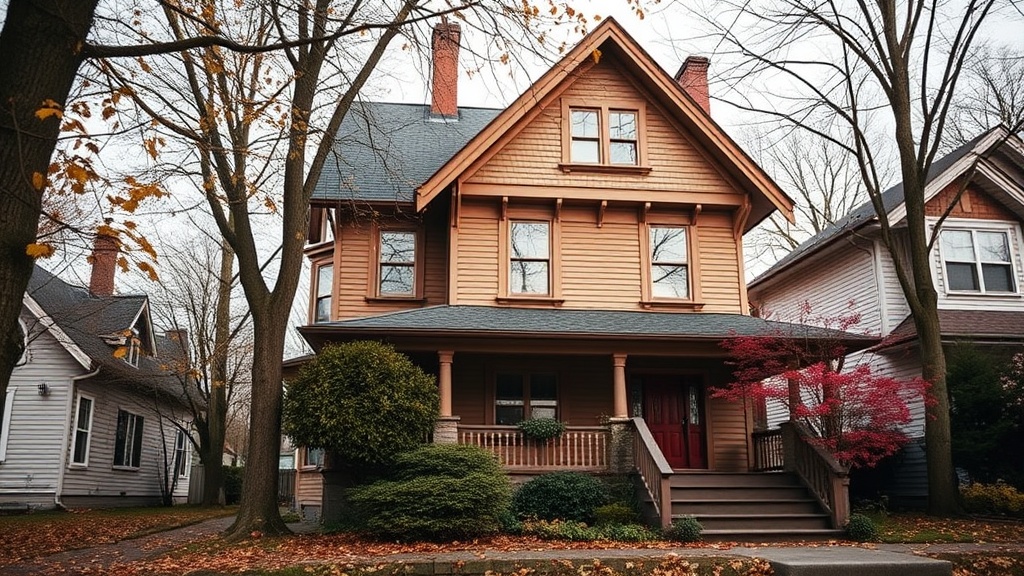
How to Uncover Your New Westminster Home's Hidden History Using Free City Resources

Did you know that roughly two-thirds of the homes standing in New Westminster today were built before 1980? Our city — BC's first capital — carries over 160 years of history in its streets, and that includes the houses, apartments, and commercial buildings we walk past every day. Whether you rent a converted heritage suite in Queens Park, own a mid-century duplex off Twelfth Street, or live in a waterfront condo with views of the Fraser River, your property has a paper trail waiting to be explored. Researching that history isn't just about satisfying curiosity (though that's reason enough). Understanding when your walls went up, who laid the floors, and how your neighborhood evolved helps you make informed decisions about renovations, connects you to our community's past, and sometimes uncovers surprising details about previous residents. The best part? Every resource you need is free and located right here in New Westminster.
Where Do I Start My New Westminster Property Research?
Start with what you already know. Grab your property's legal description from your property tax notice or strata documents — you'll need the PID (Parcel Identifier) number plus the legal lot and block numbers. Then head to the New Westminster Archives on the third floor of the Anvil Centre at 777 Columbia Street. The archives staff — some of whom have worked there for decades — know the collection inside and out. They'll point you toward the building permit registers, which in New Westminster date back to 1891. These massive ledgers contain handwritten records of who applied for permits, what work they were doing, and often the name of the architect or builder.
The permit registers are organized by year and permit number, not by address, so you'll need to search chronologically. Start with your best guess for when the house was built — if you think it's from the 1920s, begin there. Flip through the pages (they're heavy — the staff will provide book cradles) and look for your street name. When you find it, you'll see the owner's name, the cost of construction, and sometimes a brief description like "one-storey frame dwelling" or "addition to rear." This information becomes the foundation for everything else you research.
Don't skip the human sources either. Talk to your neighbors — especially the ones who've been on your block for twenty-plus years. Longtime residents in areas like Brow of the Hill or Sapperton often remember previous owners, major renovations, or even original families who built the homes. We've heard stories of homeowners discovering their house was originally a corner store, or that their living room once served as a community meeting space during the 1940s — details never written down in official records. One couple in Glenbrooke North learned their 1950s bungalow was built by the same contractor who constructed three other houses on their block, explaining the nearly identical floor plans.
What Free City Resources Are Available to New Westminster Residents?
The City of New Westminster maintains several online databases that most residents never know exist. The Heritage Inventory Database, accessible through the city's website, lets you search by address to see if your property is listed as a heritage resource — even if it doesn't have official heritage designation. You'll find construction dates, architectural styles, and sometimes photographs taken during heritage surveys conducted in the 1980s and 1990s. Even if your house isn't listed, the database provides context about surrounding properties and neighborhood development patterns.
For a deeper dive into the bureaucratic history, visit the Planning Department at City Hall on Royal Avenue. They maintain zoning maps, development permits, and building plans going back decades. While you can't remove original documents from the premises, the staff will help you review files related to your property. If you're researching a home in one of New Westminster's older neighborhoods — like the West End where many homes date to the 1910s and 1920s, or the Moody Park area with its mix of pre-war and post-war construction — you might find original blueprints or renovation permits that show how the house evolved. These files sometimes include correspondence between homeowners and the city, revealing disputes about setback requirements or arguments about property lines.
The New Westminster Public Library's local history room, located at the main branch on Sixth Street, houses city directories dating back to the 1860s. These aren't phone books — they're listings of who lived at each address, what they did for work, and sometimes their family members. Flip through the years and watch your house change hands, track how long residents stayed, and piece together the economic history of your street. Was your neighborhood home to dockworkers from the Fraser River shipyards? Railway employees from the nearby CPR yards? Shop owners from Columbia Street's retail heyday? The directories tell the story in dry but fascinating detail. You'll see a carpenter living at your address in 1925, a teacher there in 1935, and a warehouse foreman in 1945 — each decade bringing new families and new stories.
How Can I Find Historical Photographs and Maps of My New Westminster Property?
The New Westminster Archives maintains a photographic collection of over 70,000 images — many of them digitized and searchable through their online database. Enter your street name and you might find aerial photographs from 1954 showing your neighborhood before the Queensborough Bridge transformed access to the city, or street-level shots of Columbia Street before the SkyTrain construction reconfigured the waterfront. The archives also hold construction photographs for many public buildings and some private homes, especially if they were built by prominent developers or involved in significant legal disputes.
Fire insurance maps represent another research goldmine. Created by the Sanborn Map Company in the early 1900s, these detailed drawings show the footprint of buildings, construction materials, number of stories, and even the location of doors and windows. If your house was built before 1950, there's a good chance it appears on these maps. The archives staff can help you interpret the symbols — solid lines versus dashed, shading that indicates wood frame versus brick construction, and notations about heating sources or outbuildings. It's detective work, but the kind that reveals exactly how your home has changed over a century. You might discover that your house once had a back shed that burned down in the 1920s, or that what you thought was an original porch was actually added fifteen years after the initial construction.
Don't overlook the British Columbia Surveyor General's maps, available both at the archives and online through the BC Archives portal. These show the original survey lines, lot divisions, and sometimes the names of first landowners. New Westminster was laid out by the Royal Engineers in the 1860s, and their precise grid system still underlies our modern street map. Seeing your property as a numbered lot in a wilderness of forest and marsh puts your ownership in perspective — you're part of a chain that stretches back to the Colonial Office in London.
What Surprising Details Might I Uncover About My New Westminster Home?
Be prepared for the unexpected. One resident of a heritage home in Queens Park discovered their house had been moved — yes, physically relocated on rollers — from another part of New Westminster in the 1920s when the city was regrading streets. The move explained the oddly sloped floors and the chimney that no longer aligned with the roof peak. Another homeowner in the West End found that their 1940s bungalow sat on land that originally housed a Chinese market garden operation that supplied vegetables to downtown restaurants until the 1930s.
The city directories and newspaper archives sometimes reveal the human stories behind the walls. The British Columbian — published in New Westminster from 1861 to 1983 and now fully digitized — contains classified ads, social announcements, and crime reports that mention specific addresses. You might find that a ship captain lived in your home during the 1950s, or that a widow supported her family by taking in boarders during the Depression. Some residents have discovered their homes were once boarding houses with six or seven unrelated residents, explaining the unusual number of bedrooms or the second kitchen in the basement.
These aren't just interesting tidbits — they're connections to the fabric of our community. New Westminster was built by dockworkers from the Fraser River shipyards, shopkeepers from Columbia Street, railway employees from the CPR, and factory workers from the various industrial operations along the waterfront. Their lives shaped the houses we live in today. Understanding that your dining room hosted union meetings in 1947, or that your front porch was where a family received news of a son returning from the war, changes how you see your space.
Researching your home's history also creates practical benefits. That weird layout in your hallway suddenly makes sense when you realize it was originally a separate entrance for tenants. The unusually large living room? It might have been built as a space for church meetings or community gatherings — common in early New Westminster homes where public meeting spaces were scarce. Even architectural details gain meaning. The stained glass window you love might be original to the 1912 construction, or it might have been added during a 1970s renovation when Victorian revival styles were trending. Knowing the difference helps you make appropriate choices when it's time for repairs or updates.
The process takes time and patience. Some afternoons you'll spend hours squinting at handwriting in century-old ledgers and find nothing but dry permit numbers. Other days you'll stumble across a photograph showing your house with a completely different porch, or a directory entry naming a famous former resident. (New Westminster has been home to premiers, poets, and professional athletes — you never know who might have slept in your bedroom.) If you hit dead ends — and you will — try the Land Title and Survey Authority records for ownership chains, or the BC Archives in Victoria for materials related to prominent New Westminster families. Some determined researchers have traced their properties back to the original Crown grants from the 1860s when Colonel Moody and the Royal Engineers established the city grid.
There's something grounding about knowing who walked through your front door eighty years ago. In a city like New Westminster — where the past isn't abstract but built into the walls around us — that knowledge connects us to something larger than our own moment. So grab your property tax notice, head to the Anvil Centre, and start asking questions. Your house has been waiting to tell you its story.